
Partner programme · Epigenetics and genetics

Epigenetic and genetic analyses from one drop

Six analyses from capillary blood, processed by our European cooperation partner — a measurable basis for your consultation.

Only the epigenetic level responds to nutrition, exercise, sleep and strain — it alone is suitable for tracking progress.

Six analyses. Which one fits your institution?

What are you looking for?

Nutritional counselling: 3

Request a quotation
At a glance

The six panels compared

All six panels run from the same dried blood spot card, collected from a fingertip. What differs is scope, molecular level and result format. The “Molecular level” column names what a value is made of: microRNAs are messenger molecules in the blood, telomere length is the length of the protective caps at the ends of the chromosomes. The “For tracking over time” column names which values can change at all in a follow-up measurement.

What the reports actually measure

What are you looking for? Nutritional counselling

Metabolic Health

Parameters
4 epigenetic + 17 genetic
Molecular level
Epigenetics and genetics
For tracking over time
the 4 epigenetic markers only
Genetic analysis
yes
Result format
Traffic light 1–9

Healthy Aging

Parameters
4
Molecular level
Epigenetics
For tracking over time
all 4
Genetic analysis
no
Result format
% of reference, biological age

Telomere Analysis

Parameters
1
Molecular level
Telomere length
For tracking over time
yes
Genetic analysis
no
Result format
% of reference, biological age

And the numbers?

Traffic light 1–9

The most common format. Red on the left, green on the right; higher is always better: 1–3 red, 4–6 yellow, 7–9 green.

Percentages

The value in comparison with a reference group. 100 % means: precisely within the expected range.

Years

A “biological age” calculated from measured values, against chronological age — a calculation, not a determination of age.

Sample material

Dried blood spot card from a fingertip — no refrigerated shipping, no fasting.

Lifestyle radar

11 self-reported factors: Healthy Aging, Healthy Sport, Age Clock, Telomere Analysis.

Interventions

Recommendations for every marker, with source and amount: 8 to 14 per panel in one summary table, 50 listed at the individual markers for Metabolic Health.

Two panels where the methodology belongs in the conversation

Biological Age Clock

The underlying model is published as a pilot study (n = 539), with a mean absolute error of around 10 years. A single reading is not a determination of age; what holds up is the trend.

Telomere Analysis

qPCR measurement varies considerably between runs and laboratories, more so from dried blood than from venous blood. Here too it is the trend that carries the interpretation.

Two panels include genetic analyses: Metabolic Health and the Plus variant of Healthy Sport. For these, the person concerned must be informed and give written consent before the sample is taken (German Genetic Diagnostics Act, GenDG). Predictive genetic testing may only be conducted under the responsibility of appropriately qualified physicians; genetic counselling must be offered before and after the test (Sections 7 and 10 GenDG).

What is established — and what is not
Portfolio

The six analyses

Every analysis runs through the same sampling route. What differs is scope, method and the question it answers. Every card carries the same five axes as the comparison table, plus who the panel is suitable for. From every card a route leads to the full sample report: the same structure as the later report, only with invented values.

Cover of the Metabolic Health sample report
0115 pagesPDF in German

Metabolic Health

Diet by predisposition — epigenetically verifiable.

Parameters
4 epigenetic + 17 genetic
Molecular level
Epigenetics and genetics

Who it is for

  • Nutritional counselling beyond standard plans
  • Prevention practices with weight programmes
  • Where previous dietary changes have not worked

View report
Cover of the Healthy Aging sample report
029 pagesPDF in German

Healthy Aging

Biological age across four layers — traffic light, not one number.

Parameters
4
Molecular level
Epigenetics

Who it is for

  • Longevity centres and prevention practices
  • Nutritional counselling and preventive medicine
  • People aged roughly 40 and over tracking the trend
View report
Cover of the Biological Age Clock sample report
0310 pagesPDF in German

Biological Age Clock

An exploratory lifestyle signal — not an age determination.

Parameters
3
Molecular level
microRNA

Who it is for

  • Longevity and functional medicine practices
  • Health centres, coaching and workplace health
  • Where a full ageing panel would be too extensive
View report
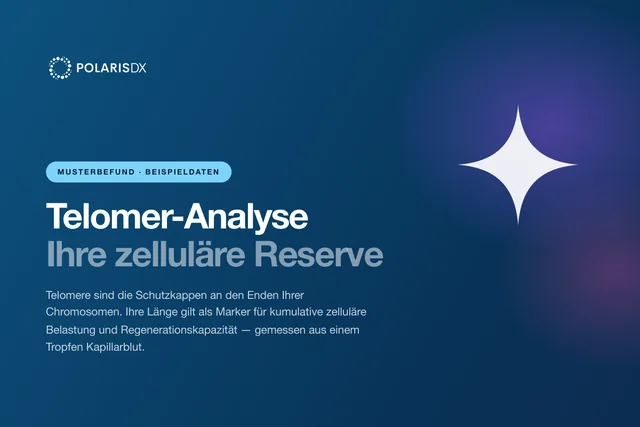
Cover of the Telomere Analysis sample report
049 pagesPDF in German

Telomere Analysis

The protective caps of the chromosomes — measured in kilobase pairs.

Parameters
1
Molecular level
Telomere length

Who it is for

  • Longevity programmes and preventive medicine
  • Nutritional counselling needing a baseline
  • Workplace programmes with a longevity focus
View report
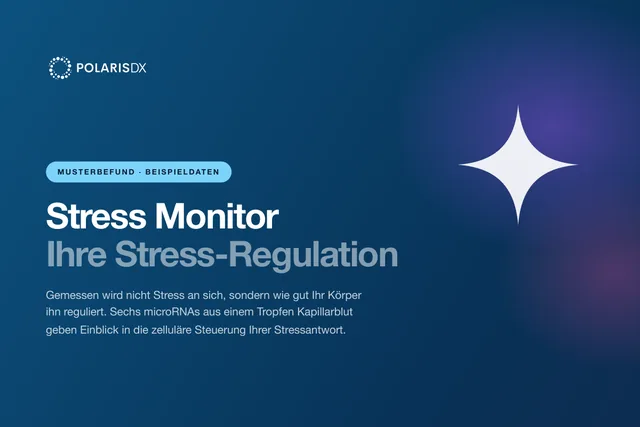
Cover of the Stress Monitor sample report
059 pagesPDF in German

Stress Monitor

Measured alongside perceived strain — four areas.

Parameters
6
Molecular level
microRNA

Who it is for

  • Workplace health management and resilience
  • Practices focused on stress prevention
  • People under sustained strain
View report
Cover of the Healthy Sport sample report
0612 pagesPDF in German

Healthy Sport

Eight microRNAs in seven assessments; Plus variant adds four variants.

Parameters
8 (Plus: + 4)
Molecular level
microRNA (Plus: + genetics)

Who it is for

  • Sports medicine and performance diagnostics
  • Sports science and performance coaching
  • Recreational and competitive athletes
View report

All six documents are sample reports: every value, genotype and personal detail is fictitious and serves solely to illustrate the report format. These are not real results.

All six as ZIP · 4.2 MB
Workflow

How it works in your practice

Six steps, one sampling route — identical for all six analyses. Four of them take place in your organisation: information and consent before sampling, the sampling itself, sending the card, and the conversation about the report. In between come the laboratory analysis and the digital report. No cold chain, no fasting requirement and no laboratory appointment for your client.

  1. 1

    Hold the consultation; document the information given and the consent obtained.

  2. 2

    Sampling: prick the fingertip, apply blood to the card.

  3. 3

    Send the card to the cooperation partner in the prepared envelope.

  4. 4

    Laboratory analysis of the genetic or epigenetic markers.

  5. 5

    Digital report with traffic-light rating and specific recommendations.

  6. 6

    Review and action plan; the interval to the follow-up measurement is set by the supervising institution.

How this becomes a consultation

A report is a programme, not a single value.

  1. 01

    Before the consultation

    The full report is available ahead of the appointment. Read it through and mark what stands out: the traffic-light ratings, their distribution across the evaluations, the starting points named. That way it is clear from the outset what to discuss.

  2. 02

    During the consultation

    Genetic variants are determined once in a lifetime and describe the starting position. Only the epigenetic level responds to nutrition, exercise, sleep and strain — it alone is suitable for tracking progress.

  3. 03

    Afterwards

    The interval to a follow-up measurement is set by the supervising institution. Laboratory, sample material and sampling should stay the same — and whatever happens in between belongs in the same documentation as the values.

Frequent questions

What professional users ask

Eight answers from conversations with organisations. They also name the limits: which analysis is exploratory, where measured values vary considerably, where the line to clinical diagnostics runs, and what the Genetic Diagnostics Act requires before sampling.

What is the difference between genetics and epigenetics?
Genetic variants are unchangeable for life and are recorded once; epigenetic markers describe the current regulatory state and can be measured over time. Only the epigenetic level is suitable for tracking progress — set out in full under “Understanding the values”.
How is the sample taken?
A few drops of capillary blood from the fingertip go onto a dried blood card and dry there. No venipuncture, no centrifuge, no cold chain — sampling is possible in the practice or at home. The card is sent to the cooperation partner in the prepared envelope.
When does a follow-up measurement make sense?
After 4 to 6 months at the earliest and under conditions as similar as possible. The trend carries the message, not the single value — an initial and a follow-up measurement together form a plannable programme. Acute infections shift inflammation markers, so the timing should be chosen deliberately.
Do these analyses replace clinical diagnostics?
No. They are consultation and monitoring tools, not a medical diagnosis and not a substitute for clinical assessment. Where findings suggest a condition requiring treatment, the person belongs in medical or psychotherapeutic assessment.
What are the legal requirements?
In Germany, genetic analyses are subject to the Genetic Diagnostics Act: the person examined must be informed and give written consent before sampling, and this must be documented. Predictive genetic testing may furthermore only be conducted under the responsibility of appropriately qualified physicians; genetic counselling must be offered before and after the test (Sections 7 and 10 GenDG). It applies to Metabolic Health and to the Plus variant of Healthy Sport.
How robust are the results?
That differs by analysis, and we state it openly. The sampling route itself is sound, as is the monitoring approach. The microRNA age clock, by contrast, is exploratory, and qPCR telomere values vary considerably. The evidence sheet separates established from preliminary evidence and names the sources.
What do the analyses cost?
B2B terms on request, tiered by volume and contract model. There is no public consumer price list. Test cards, shipping material and report delivery are part of the offer.
Which organisations is the programme suitable for?
The analyses are supplied to professional users only: prevention and longevity practices, nutritional counselling, sports medicine and coaching, and workplace health management.
Contact

Request a quotation

The analyses are supplied to professional users only. B2B terms on request, tiered by volume.

Get tested

ndu Clinic · London

Would you like one of the six analyses done for yourself? Our partner practice ndu Clinic offers the tests in London — from sample collection through to discussing the result.

22 Harley Street, London W1G 9PL · Dr. Goran D. Stojanovic

Visit ndu Clinic

The analyses are laboratory services provided by our cooperation partner and are not CE-marked in vitro diagnostic devices. They serve consultation and monitoring and do not replace clinical diagnostics. Genetic analyses are subject to national genetic testing legislation. In Germany, predictive genetic testing may only be conducted under the responsibility of appropriately qualified physicians; genetic counselling must be offered before and after the test.

Laboratory analysis by our cooperation partner · ISO 9001:2015